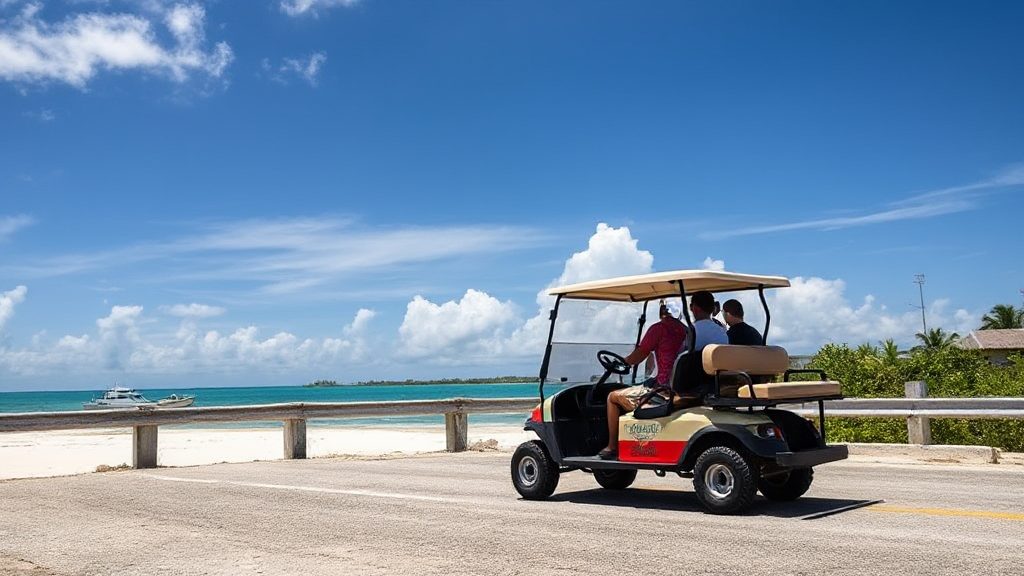
Dive Gear, Rods, and Coolers: Hauling Bulky Kit in a San Pedro Cart
You step off the water taxi at the dock in San Pedro with a tank bag over one shoulder, fins in the other hand, and a rolling cooler bumping behind you. The first question isn’t where to eat or which reef to dive—it’s where all this gear goes. The answer, for most dive and fishing travelers, is a golf cart. And if you’re watching costs, the Cheapest golf cart rental San Pedro Belize options are the ones that let you haul bulky kit without paying resort transfer prices.
This is a gear-by-gear fit guide. I’ll walk through how tanks, fins, rods, coolers, and camera cases ride in a 4-seater versus a 6-seater, where each item should sit, and the loading order that keeps your rental cart stable on sandy island roads.
Why a Golf Cart Beats a Taxi for Dive and Fishing Kit
Taxi drivers in San Pedro are friendly, but most sedans and vans aren’t set up for wet gear, long rod tubes, or a 45-quart cooler. A golf cart is open, flat-floored, and easy to hose out at the end of the day. For a diver or angler, that matters more than leather seats. The practical choice is a San Pedro Belize golf cart rental that includes free delivery to the airport or water taxi dock, so you’re not dragging a tank bag across town before you’ve even checked in.
Cost is the other factor. A private transfer with gear can run more than a day of cart rental, especially if you’re staying south of town or near the bridge. The cheapest carts start around US$35 per day for a 4-seater, and that price includes unlimited bridge passes and 24/7 roadside support with the operator referenced here. That’s the baseline to compare against any taxi quote.
What “Cheapest” Actually Means for Gear Haulers
Cheapest doesn’t mean smallest. A 4-seater is cheaper per day, but if you’re traveling with two divers and a fishing buddy, the 6-seater often works out cheaper per person and gives you a dedicated gear row. Ask two questions before booking: does the daily rate include bridge passes, and is delivery to your dock or hotel free? Those two line items are where budget rentals quietly become expensive.
Tanks, Bags, and Fins: Fitting Scuba Kit in a 4-Seater
A standard aluminum 80 tank is about 26 inches tall and 7 inches across. Two tanks plus a regulator bag will fit in the rear cargo well of a 4-seater if you lay them flat and wedge them with a dry bag. The mistake most divers make is standing tanks upright behind the seat—on a bumpy road to the marina, they tip and roll into the passenger’s back.
Fins are the awkward item. Long free-diving fins don’t fit neatly in the footwell, so slide them along the side rail or strap them to the rear rack if the cart has one. Booties and masks go in a mesh bag under the front seat, not loose in the basket where they can bounce out at a speed bump. If you’re solo or a couple, this layout works fine and keeps the Golf cart rental San Pedro Belize price at the lowest daily tier.
Where the Tank Bag Goes
Put the tank bag on the floor between the front seats, not on the passenger’s lap. It keeps weight low and centered, which matters on the sandy corners near the south end of the island. Keep your dive computer and torch in a dry pouch clipped to the bag handle so they don’t slide under the seat.
Rods, Tackle, and Coolers: The Fishing Load
Fishing gear is longer and more fragile than dive kit. A 7-foot rod in a hard tube won’t fit inside a 4-seater without hanging over the passengers, so plan to carry it along the side or on a rear rack with a bungee. Two-piece rods break down and travel much easier. Tackle boxes fit under the front seat, but keep them out of the sun—heat warps soft plastics and degrades line.
The cooler is the heaviest single item most travelers bring. A loaded 45-quart cooler weighs 40 to 50 pounds. In a 4-seater, it belongs on the rear cargo deck, pushed forward against the seat back, never hanging off the tail. In a 6-seater, you get a middle row you can fold or use for cooler and tackle together, which is why groups of anglers usually end up choosing the larger cart even at a higher daily rate.
Cooler Placement and Ice
Drain the cooler before loading it into the cart. Meltwater sloshing around the floor is the fastest way to ruin a rental’s carpet or leave a deposit dispute at return. Ask for a cart with a flat rear deck, and bring a small towel to sit under the cooler so it doesn’t slide on turns.
Six-Seater Layouts for Groups With Mixed Gear
When two divers and two anglers share a cart, the 6-seater becomes a gear puzzle. The usual working layout is tanks and dive bags in the rear cargo area, rods along the side rails, cooler in the middle row, and passengers up front. That keeps the heaviest items low and behind the axle, which is exactly where you want them on the road to the bridge.
An Ambergris caye golf cart rental with unlimited bridge passes is worth prioritizing here, because gear-heavy groups tend to cross the bridge more often—north to a fishing flat, south to a dive shop, back to town for dinner. Each crossing costs time and money if passes aren’t included. Confirm the pass policy in writing before you pay.
Passenger Comfort Versus Gear Space
Don’t fill every seat and expect gear room. A 6-seater with six adults and full dive kit is cramped and top-heavy. If your group is four people with bulky equipment, treat the 6-seater as a four-person cart with a gear row—that’s the realistic capacity.
Loading Order and Common Mistakes
Load heavy first, light last, and keep the center of gravity low. Here’s the order that works for most dive-and-fishing trips:
- Cooler on the rear deck or middle row, pushed forward.
- Tanks laid flat in the cargo well, wedged with a dry bag.
- Tackle boxes under the front seat, out of direct sun.
- Rod tubes along the side rail, bungeed at two points.
- Fins, masks, and mesh bags in the footwells last.
- Camera case and dry pouch within reach of the driver.
The most common mistakes are standing tanks upright, overloading the rear rack so the front wheels feel light, and leaving wet gear in the cart overnight. Rinse and dry your kit at the hotel, not in the rental. A quick comparison helps before you book:
| Gear Item | 4-Seater | 6-Seater |
|---|---|---|
| Two tanks | Fits flat in rear well | Fits with room to spare |
| 45-qt cooler | Rear deck only | Middle row or rear deck |
| 7-ft rod tube | Side rail, bungeed | Side rail or rear rack |
| Dive bags and fins | Footwells and front basket | Dedicated gear row |
If your priority is the lowest daily rate and you’re traveling light, the 4-seater is fine. If you’re hauling tanks, rods, and a cooler together, price out a San Pedro golf cart rental in the 6-seater class before you decide—the per-person cost often comes out lower than two separate 4-seaters.
Frequently Asked Questions
Can I fit two scuba tanks in a 4-seater golf cart?
Yes, if you lay them flat in the rear cargo well and wedge them so they don’t roll. Standing them upright behind the seat is unstable on sandy roads and can damage the cart’s rear panel.
Is a 6-seater worth it for fishing gear alone?
Usually yes for two or more anglers. The middle row gives you a place for tackle and a cooler without stacking gear on passengers, and the heavier cart handles better with a full load.
Do rental carts include bridge passes for gear runs?
Some do and some don’t. Ask specifically whether unlimited bridge passes are included, because gear-heavy groups cross the bridge more often than typical tourists and the fees add up quickly.
How do I keep wet dive gear from damaging the cart?
Rinse and dry your kit at your hotel, drain the cooler before loading, and use a towel or dry bag under wet items. Leaving saltwater gear in the cart overnight is the fastest route to a cleaning fee.
